
Conditions d’achèvement
Lecture 3: Choice of the Course-Book
By the end of this lecture, students will be able to:
1. Examine the criteria for selecting an appropriate coursebook.
2. Evaluate the alignment between a coursebook and curriculum objectives.
3. Assess the pedagogical suitability of a coursebook for learners’ needs.
The Course Book.
Selecting appropriate materials in course design is essential for establishing an effective educational environment. These materials function not only as resources but also as connectors between instructional implementation and targeted learning outcomes. Mishan and Timmis (2015, p. 45) note that "the coursebook is a trusted source for the new teacher and a guide for the experienced one. This observation indicates that coursebooks foster systematic consistency and provide guidance, particularly in large classroom settings. For instance, imagine a large classroom of students preparing for an English language examination. A coursebook provides a structured progression of units and exercises, allowing the teacher to guide the students through a sequenced learning path. As the teacher follows the coursebook, the students engage in activities that progressively build their language skills, facilitating their gradual knowledge acquisition. This systematic consistency enables the teacher to effectively manage the diverse needs of the students while optimizing time and effort. Tomlinson and Masuhara (2018, p. 26) further state that "it helps administrators to gain face validity for their courses, to timetable lessons, and to standardise the teaching in their institutions."
Collectively, these perspectives emphasize that the textbook remains the primary medium for delivering language learning materials. However, questions persist regarding whether it is, or has ever been, the most effective option (ibid, p.25).
This awareness encourages viewing the textbook as a pedagogical aid rather than an unquestionable authority. Exclusive reliance on textbooks without critical reflection may result in missed learning opportunities. Teachers can ask themselves questions, such as, “Does this textbook content align with my students'” current needs or interests? or Are there alternative activities that might better engage students and foster deeper understanding? By reflecting on these prompts, educators can make more informed decisions about when to adhere to or depart from the textbook, thereby maximizing learning opportunities.
Roles of Coursebooks in ELT
Before delving into the various roles that coursebooks play in English Language Teaching, it's essential to understand how they contribute to the overall learning experience. This section provides an overview of these roles, offering insight into how coursebooks serve as foundational tools in educational settings. By exploring this inventory, educators can better grasp the multifaceted purposes coursebooks serve, from being a resource for material presentation to fostering learner autonomy.
- Presents core material clearly
- Provides diverse activities for learners to practice and engage in communicative interaction.
- Offers clear references on grammar, vocabulary, and pronunciation.
- Stimulates ideas for classroom language activities.
- Outlines a comprehensive syllabus.
- Enables self-directed or self-access work.
- Supports less experienced teachersin buildingn confidence.
As previously discussed, the coursebook functions as a fundamental instrument, mediating pedagogical processes across various dimensions. It also promotes learner autonomy and self-directed learning. For instance, a student might say, 'Using a coursebook allows me to plan my study schedule independently and explore topics that interest me.' This dynamic influences teaching practices through ongoing assessment and reflection, aiming to align instructional design with learners’ needs. Nevertheless, caution is warranted, as 'we are primarily concerned with teaching the learner, not the textbook, Cunningsworth (1995, p.7).
Although textbooks are instrumental in enhancing both teaching and learning, their selection depends on multiple factors. Richards (2004, p. 15) proposes that textbooks should meet the following criteria:
Provide structure / standardise instruction / maintain quality
variety of resources/efficiency / effective models / appealing.
Provide Structure: the selection of the textbook should reflect a logical sequence of units, items, and activities from one part, with the degree of difficulty gradually increasing from the other.
Standardise Instruction: this ensures that the content aligns with the syllabus, learning objectives, assessment tools & learning outcomes.
Maintain Quality: A standard textbook maintains that the content & instruction are balanced, explicit, systematic and accurate.
Variety of Resources: incorporating resources provides flexibility and a bundle of illustrations and examples that match learners’ styles and preferences. For instance, digital platforms such as online language labs or interactive apps can supplement traditional textbooks by offering varied exercises catering to different learning styles. Additionally, resources like video tutorials or podcasts can provide auditory and visual learners with alternative ways to engage with the material, further enhancing the learning experience.
Efficiency: the extent to which a textbook is practical & useful.
Effective Models: Textbooks often provide accessibility to reliable content that can add significance to the learning process. Inserting real-world models is of paramount significance for learners’ skills and cognitive development.
Appealing: textbooks tend to represent a visual appearance that attracts users, mainly covering typography, design, layout, images. While textbooks are valuable for delivering content to language learners, they also present limitations, especially when overused. Mishan (2010) criticizes certain textbooks for restricting learners' cognitive objectives. Similarly, Mashura et al. (2008, p. 310) argue that textbook content is often confined to reading and listening activities. Additionally, Tomlinson (2013, p.139–140) notes that textbooks may marginalize learners’ real-life experiences and practical application, focusing predominantly on linguistic and analytical skills. To address these limitations, educators can integrate tasks that move beyond reading and listening. For example, after a reading segment, learners might engage in a project where they create a presentation or a debate, evaluating and synthesizing information from multiple sources. This encourages higher-order thinking and ensures a richer, more dynamic learning experience. Consequently, Cunningsworth (1995) recommends that textbook evaluation should consider learners’ needs, objectives, available facilities, and the support role.
What a Coursebook Contains?
• Psychological support/security
• A means of learning for students
• It is used as a resource.
• Provides multiple choices for learners.
Materials should be authentic, thus reflecting real-world language use and ensuring the content is relatable and engaging for learners. Authentic materials often contain language input that slightly exceeds learners' current proficiency levels, thereby serving as comprehensible input. This aligns with Krashen's Input Hypothesis, which suggests that learners make the most progress when they are exposed to language that is just beyond their current level of competence. By incorporating authentic materials into course designs, educators facilitate students' progression in language acquisition, encouraging a natural and gradual expansion of their linguistic abilities.
What a course book should avoid?
Approaches imposed on teachers. To illustrate, a teacher might adapt a rigid grammar-focused exercise by transforming it into a collaborative storytelling activity. By including elements like peer reviews and open discussions, teachers can shift the focus to a learner-centered approach that encourages creativity and engagement.
• Offensive or provocative content
• Cultural differences not acknowledged.
• No flexibility
• No humanistic
• Unwilling to adapt. Tomlinson & Masuhara (2018, p. 41, 42)
Textbook Selection Requirements (Richards 2001), p. 28–29
Institutional Factors
- type of curriculum
- length & intensity of the course.
- availability & cost
- resources available & facilities.
Teacher Factors
- proficiency
- level of training
- experience (methodologies)
- attitudes
- teaching styles
Learner Factor
- learners’ needs & aims, styles
- proficiency
- learning & daily experience
- age/interests
- cultural / language background
From a pedagogical standpoint, integrating textbooks should prioritize adaptability, relevance, and engagement. Research consistently demonstrates that the careful selection and use of textbooks significantly influence students’ learning outcomes.
Adaptation of/from Textbooks
According to (McCullagh & Wright 2008, p. 110)“Adaptation is an inevitable & necessary procedure to ensure a match between materials & learners”.
Adapting textbooks as needed addresses their limitations and ensures content authenticity, aligning with learners’ linguistic and cognitive abilities. This process also considers learners’ styles, interests, and abilities, thereby fostering critical thinking and more effective use of materials.
Since “it is difficult & rare for adaptations to be made to curricula” (Stod, MO). Such considerations invite further reflection for McCullagh & Wright (2008), who endorse that “teachers need support in terms of adaptability, engagement & guidance”. (Ibid). Despite its immense value, Harrison (2014) claims that coursebooks will soon disappear as other digital avenues replace their reliable role. As educators navigate these changes, it becomes crucial to assess when digital resources should be utilized. Criteria such as adaptability to diverse learning styles, ease of updating content, and potential for interactive engagement can guide teachers. By asking when a digital resource should supersede, supplement, or replace a print coursebook, educators can develop adaptable strategies to keep pace with media evolutions.
Achieving effective selection, use, and adaptation of textbooks is challenging, particularly when ensuring their continued relevance to the local context regarding timing and availability.
Textbook Selection Criteria (Based on Harmer 2001, p.75)
a- Price & availability: whether it can be afforded.
b- Layout, design & ease of use: how it looks, handy, eye-catching.
c- Instructions : (decide whether it is easy or difficult)
d- Methodology: Do methods match our beliefs?
E-frontend syllabus: It aligns with what learners want to study.
f- Topics: engaging / realistic.
Textbook evaluation remains a critical concern, as textbooks provide essential materials for effective and efficient teaching (Lyons, 2013, p. 491). Regular evaluation is necessary to enhance the efficacy of textbooks in both teaching and learning contexts. Collaborative efforts among educators are vital for determining which materials to retain or exclude. As Harmer observes, “where more than one teacher is using the same book at the same level, they may want to share their experiences about what works and what is more problematic”. “It is good to hear about ways in which colleagues adapt or add to what is in the book” (2001, p. 74). In summary, the effectiveness of textbooks requires ongoing evaluation and improvement at all levels.
Textbooks are regarded as a crucial standpoint of pedagogical and structured perceptions of the intended taught content. Consequently, they are designed to ensure delivery of what has been included in the curriculum and syllabus in order to meet objectives and reinforce quality assurance. In this respect, Cunningsworth (1995,p.54) outlines the following:
· Choosing your course book
- · A source for presentation material.
- · A source of activities for learner practice and communication interaction.
- · A reference source for learners on grammar, vocabulary and pronunciation.
- · A source of stimulation and ideas for classroom language activities.
- · A syllabus
- · A resource for self- directed learning and self-access work.
- · A support for less experienced teachers who have yet to gain in confidence.
According to the above categorization, the course book functions as a fundamental teaching materials which considers primarily: the instruction design, teacher support and learners’ engagement. The text book offers guidance, followership and indicates learners’ progress as it is equipped with activities that not solely help teachers scaffold the enhancement process of learners but also allows for a more autonomous notion to be established among them. (CLT/TBL)
Though, the over-reliance of text books may:
Decrease teachers’ novelty and continuous professional development regarding his/her teaching practices and ensuring to criteria of suitability of content as holding awareness of learners’’ needs is a pillar toward success and efficiency.
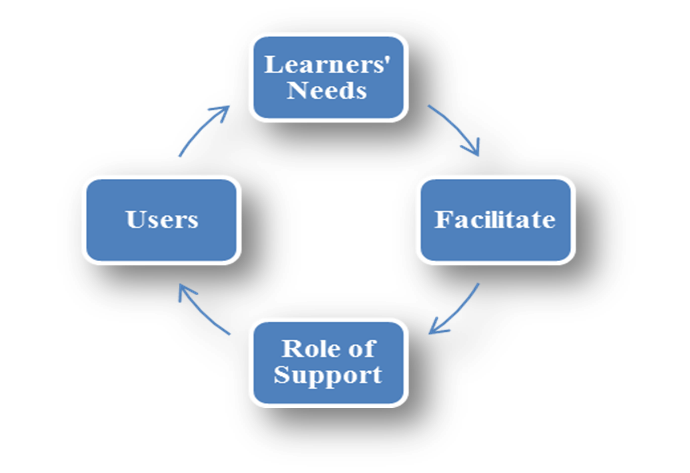
Cunningsworth (1995) Textbook Evaluation Criteria
Textbooks based on Richards (2001,p.254/255)
· Provide structure
· Standardize instruction
· Maintain quality
· Variety of resources
· Efficiency
· Effective models
· Appealing
Richards mentions that textbooks can bring upon a clear roadmap through offering context coverage and support even for novice teachers, in addition to being manageable easier to be accessed structurally.
Reflection Question 1: Based on the previous content, what are the risks that may arise from following the textbook blindly?
RF2: Provide a critical analytical interpretation.
Make use of the example used during the lecture.
Modifié le: mardi 17 février 2026, 07:21